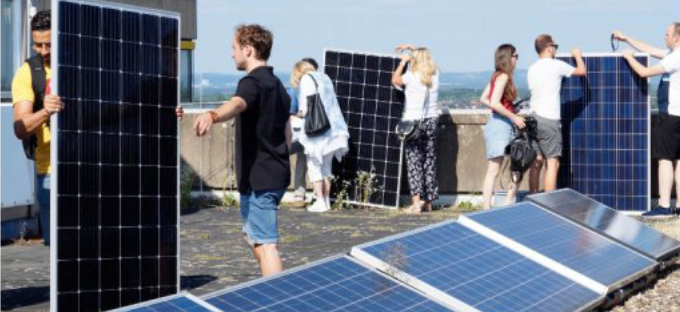
DIY Energy Transition”: TH Köln explores the use of balcony solar systems in everyday life
October 2026 // The energy transition happens in people's everyday lives, not in grand statements. Often, it's very practical questions that people are concerned with:
- Is generating your own electricity only for tech enthusiasts?
- How much effort does it involve in everyday life?
- Is it worth adapting household routines?
- And how does it change the way people think about their own electricity consumption?
Over several months, participants document their experiences with installation, use and changes in everyday life, using text and voice messages to capture their experiences as they happen.
We are delighted to support TH Köln in this project. What we find particularly interesting is that many of these changes would probably remain largely invisible in a single interview. Only over time does a picture emerge of how new technologies actually become part of everyday life – through small routines, moments of realisation, discussions and sometimes unexpected challenges.
For us, this is a great example of how qualitative diary research can make societal transformation processes more tangible and easier to understand.
Find out more about the “DIY Energiewende” project: www.th-koeln.de
Project background:The interdisciplinary and participatory “DIY Energiewende” project is led by Prof. Dr. Valérie Varney and coordinated by Dr. Eva-Maria Grommes at TH Köln's Cologne Innovation and Transfer Lab. The project partner is the WAJ multigenerational community centre in Cologne-Neuehrenfeld. The project is funded by the German Federal Environmental Foundation (Deutsche Bundesstiftung Umwelt, DBU) with approximately €250,000 until the end of March 2027 and is part of the DBU funding initiative “Transformative Education for Sustainable Development”.
Free webinars
Online moderation, digital diaries, focus groups, community planning... In our webinars, we introduce new tools and methods, share practical experience and offer ideas, inspiration and insights for your digital qualitative research.View topics and dates
Getting started is easy: live sessions, webinars and personal advice
We would be happy to introduce our solution in more detail through a live session, webinar, Lunch & Learn or individual training. Get in touch - we look forward to your questions and a conversation.