QUALITATIVE SURVEY
Ask asynchronously. Explore openly. Compare systematically.
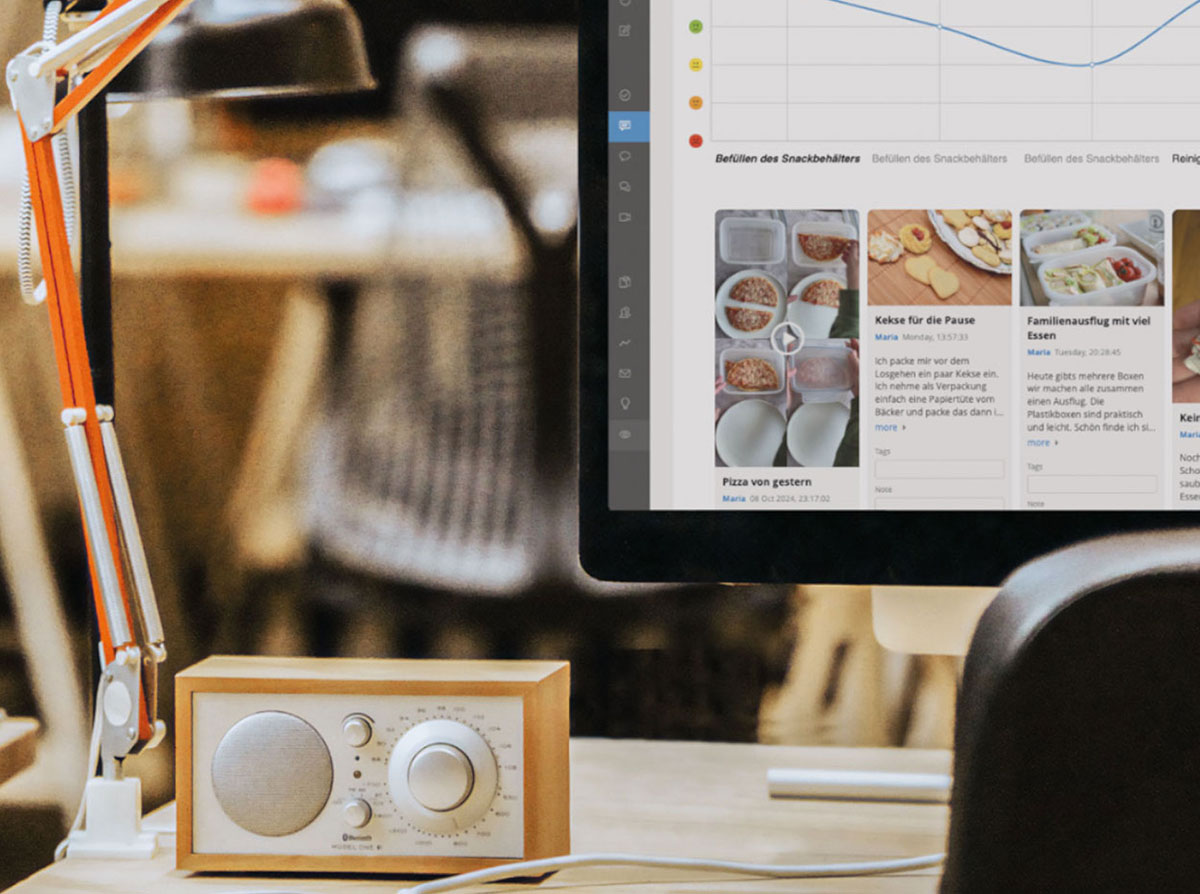
Qualitative surveys combine open exploration with clearly defined study logic. Participants respond through text, photos, audio, video, ratings or sorting tasks - flexibly within their own time frame and without coordinating interview appointments.
Filters, branching and different question paths make even complex designs possible. You gain rich qualitative data and can systematically identify differences between target groups, concepts or usage situations.
Discuss a qualitative survey
Filters, branching and different question paths make even complex designs possible. You gain rich qualitative data and can systematically identify differences between target groups, concepts or usage situations.
BENEFITS
What makes this method special
Structured
Questions, tasks and stimuli can be organised into clear topic blocks.
Flexible
Open-ended questions, media uploads, ratings and selection tasks are combined.
Comparable
Responses can be analysed across target groups, concepts and usage situations.
Supports complex routing
Routing, filters, branching and different paths enable sophisticated designs.
Multimodal
Text, image, audio and video responses provide vivid, context-rich data.
Efficient
Multiple participants work in parallel, keeping ongoing moderation effort manageable.
APPLICATIONS
For research questions in real-life contexts.
Suitable for projects seeking to understand specific situations, developments and differences between target groups.
PLATFORM
Questionnaire logic that allows qualitative depth.
The survey suite offers open-ended and closed-ended tasks, scales, matrices, rankings, image selection, uploads and recordings. Touch-optimised tools, card sorting, like-dislike tasks and creative activities extend the design options.
Scheduling, filters and profile characteristics allow tasks to be delivered individually. Researchers monitor fieldwork progress, ask follow-up questions where needed and export results, including media, in structured formats for further use.
Scheduling, filters and profile characteristics allow tasks to be delivered individually. Researchers monitor fieldwork progress, ask follow-up questions where needed and export results, including media, in structured formats for further use.
- Open-ended text, audio, video and photo responses
- Closed-ended questions, scales, matrices, rankings and image tasks
- Filters, branching and differentiated question paths
- Recurring questionnaires for moments of use and experience
- Targeted follow-up questions on individual responses
AI IN QUALITATIVE SURVEYS
Analyse open-ended and closed-ended data together.
The integrated AI analyses open-ended responses, images and transcripts and can relate them to closed-ended results and profile characteristics. This makes it faster to identify themes, differences, patterns, sentiment and relevant evidence - without exporting data from the platform.
RESEARCH QUESTIONS
Typical questions for this method.
Concept comparison
How do reactions, comprehensibility and relevance differ between variants?
Usability
What barriers, expectations and ideas for improvement emerge during specific tasks?
Target groups
Which attitudes and usage contexts distinguish segments from one another?
International
How can open-ended responses from multiple markets be compared systematically?
CONSULTING
Combine qualitative depth with a clear structure.
We show you how to combine open exploration, multimedia and differentiated question paths within one study design.

+49 (0)30 53012360